
It’s More Than a Cup of Tea
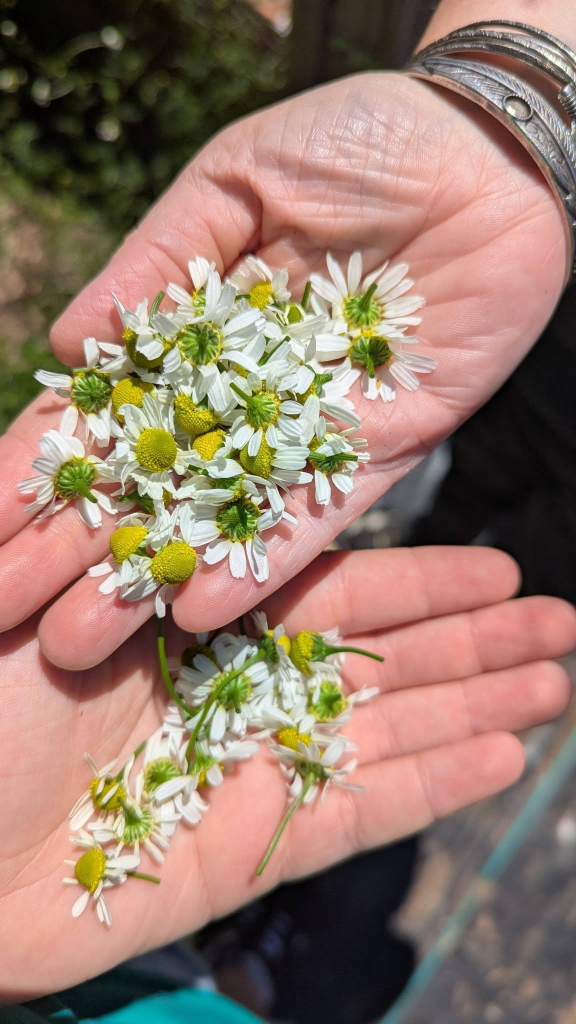
Chamomile has been treasured for centuries as one of the world’s most beloved calming herbs. Known scientifically as Matricaria chamomilla, this cheerful member of the daisy family (Asteraceae) has been used in kitchens, herbal medicine cabinets, and gardens for generations. While most people recognize chamomile as a relaxing bedtime tea, this gentle herb offers much more than a peaceful night’s sleep.
Its delicate flowers have traditionally been used to soothe the body both inside and out, making chamomile one of the most versatile herbs to keep on hand.
Meet Chamomile
Scientific Name: Matricaria chamomilla
Family: Asteraceae
Edible Parts: Flowers and leaves
With its tiny white petals and sunny yellow centers, chamomile is easy to recognize and simple to grow in many home gardens. The flowers are typically harvested at peak bloom and dried for teas, tinctures, infused oils, salves, and bath products.
Traditional Herbal Uses
For generations, herbalists have used chamomile as a:
- Mild sedative
- Antioxidant
- Antispasmodic
- Antimicrobial
- Anti-inflammatory herb
Because of these properties, chamomile has traditionally been used to help support:
- Relaxation and restful sleep
- Occasional upset stomach
- Feelings of stress and nervousness
- Minor muscle aches
- Minor burns and scrapes when used topically
Although research supports some of these traditional uses, herbal remedies should complement—not replace—professional medical care.
Ways to Use Chamomile
One of the reasons chamomile remains so popular is its versatility.
You can enjoy it as:
- Herbal tea
- Tincture
- Infused oil
- Healing salve
- Bath soak
- Steam facial
- Compress for irritated skin
The dried flowers also make beautiful additions to homemade soaps, lotions, and herbal sachets.
Growing Chamomile
Chamomile is one of the easiest herbs for beginner gardeners.
It enjoys:
- Full sun to partial shade
- Well-drained soil
- Moderate watering
- Regular harvesting to encourage more blooms
The flowers attract bees and other beneficial pollinators while adding cheerful color throughout the growing season.
A Few Precautions
Chamomile is generally considered a gentle herb, but it may cause allergic reactions in people sensitive to plants in the daisy family. Because it can promote relaxation and drowsiness, avoid using it before driving or operating machinery. If you are pregnant, nursing, taking medications, or have underlying medical conditions, consult your healthcare provider before using medicinal herbs.
From My Kitchen
Chamomile is one of those herbs that always reminds me to slow down. I love keeping a jar of dried flowers tucked away in the pantry because they seem to find their way into everything—from a warm cup of tea after a busy day to homemade bath salts and soothing skin balms. It’s one of those simple plants that quietly earns its place in the homestead, reminding us that sometimes the gentlest herbs become the ones we reach for most often.


Leave a Reply